


FAQ — Julie Papagni's Guide to Moving & Living in Sarasota
Julie Papagni
Julie Papagni
Julie Papagni
248-707-0998
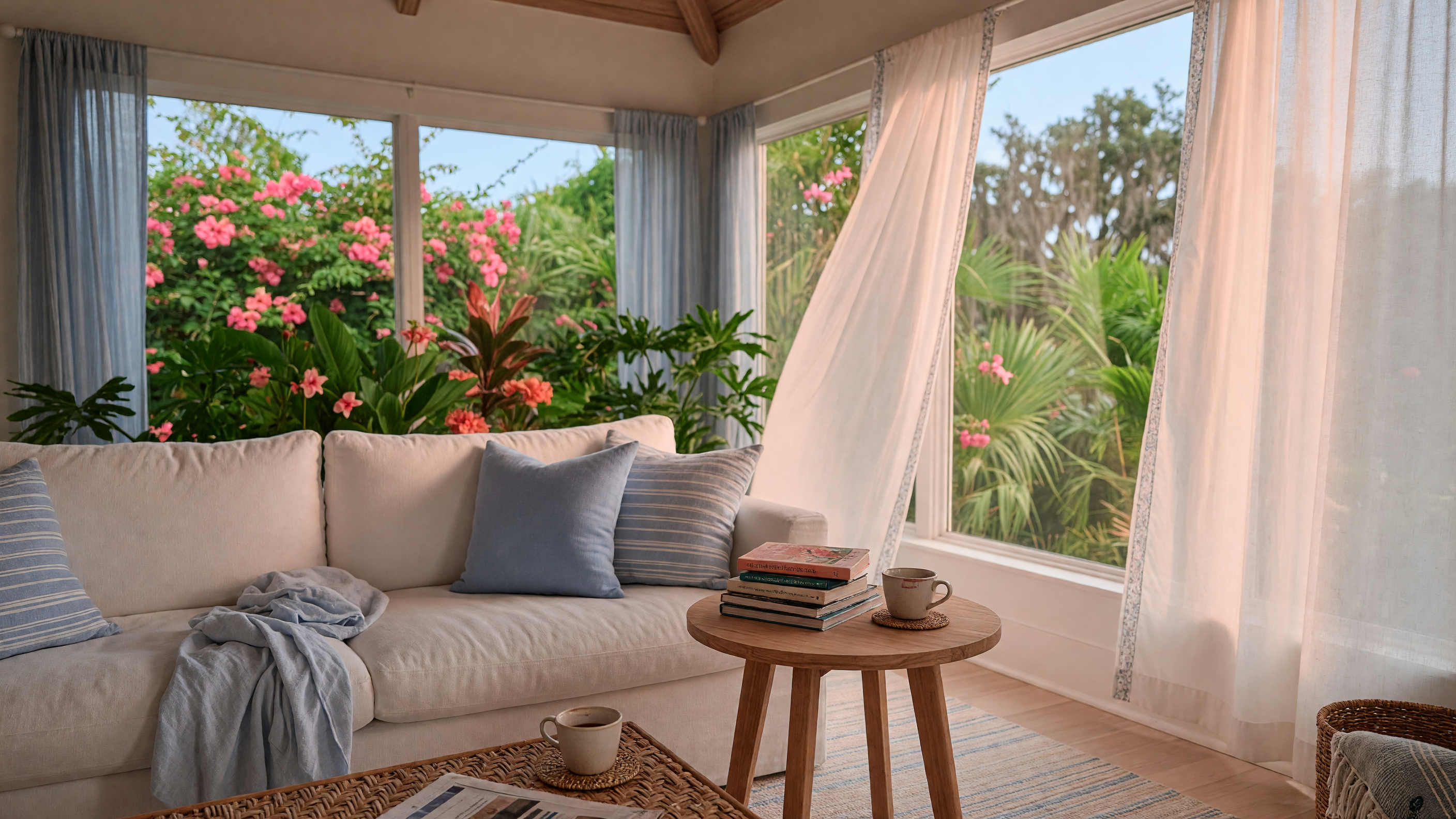
Warm coastal living room in Sarasota with tropical views — the lifestyle that awaits
Honest Answers

Frequently Asked Questions
About Living in Sarasota

The questions I hear most from people considering a move to Sarasota — answered with the honesty and heart of someone who's been exactly where you are right now.

Julie Papagni — Broker Associate with eXp Realty, Sarasota

"I relocated from Michigan to the Palmer Ranch area, and I remember exactly what it felt like to have a hundred questions and not know who to ask. That's why I put this page together — real answers, from someone who's walked the same path you're considering. No scripts, no sugarcoating. Just the truth."

— Julie Papagni, Broker Associate

What about hurricanes?

I'll be honest — when I first moved to Florida from Michigan, hurricanes were the thing that kept me up at night. I'd seen the news coverage, the devastation, the flooded streets. It felt terrifying and completely out of my control.

Then Hurricane Ian hit in my first year here. It was a Category 4 storm with sustained winds of 155 mph — one of the worst hurricanes to ever strike Southwest Florida. I'm not going to sugarcoat it: the preparation was real. We boarded up, stocked up, and hunkered down. But when it was over and I rolled up that garage door… it looked like a severe thunderstorm back in Michigan. You know the kind — where it just rains sideways for a few hours? That's genuinely what it felt like from inside the house. No water damage. No wind damage. Nothing.

My house — like most well-built modern homes on Palmer Ranch — was built to withstand exactly this. And that's the point: the fear is almost always worse than the reality.

How Florida homes are built to handle hurricanes

After Hurricane Andrew devastated South Florida in 1992, the state completely overhauled its building codes. The Florida Building Code (FBC), updated continuously since 2002, is one of the strictest in the nation. Homes in Sarasota County must meet design wind speeds of 150–170 mph, with continuous load paths from roof to foundation, impact-resistant windows and doors in wind-borne debris regions, and reinforced roof-to-wall connections. Essentially, every home built after 2002 is engineered to handle major hurricanes.

Here's a comparison that really clicked for me when I first moved down: hurricane preparation is almost exactly the same as preparing for a severe snow or ice storm back in Michigan. You know the drill — the weather alert goes off, you head to the grocery store, stock up on water, batteries, and non-perishable food, make sure you have what you need to ride it out. In Michigan you'd also need salt for the driveway, shovels, maybe gas for the snowblower — all that winter-specific stuff that's a total pain. The difference is, in Florida you do all that once in a great while. Not every winter. Not for months on end. Just the occasional hurricane.

What preparation actually looks like in practice

Here's my real hurricane prep routine: keep a 7-day emergency kit stocked year-round (water, non-perishable food, prescriptions, batteries, flashlights, important documents in a waterproof bag), bring in outdoor furniture when a storm is approaching, test the generator if I have one, know my evacuation zone (most of Palmer Ranch is Zone C — meaning no mandatory evacuation for most storms), and fill up the cars with gas when a watch is issued. That's it. If that sounds familiar, it should — it's basically the same thing you'd do before a Michigan blizzard, minus the salt and shovels.

What I try to tell people who are nervous about hurricanes is this: think about everything you dealt with every single winter up north. The icy commutes, the days you couldn't get out of your driveway, the months of grey skies and cold. That was a seasonal grind — five months out of the year, every year. Here in Florida, you get gorgeous weather almost every day, and then once in a while a hurricane comes through and you spend a day or two preparing and riding it out. The trade-off is overwhelmingly in your favor. Nobody in Michigan says "I'm never moving to Michigan because of snow" — but somehow people say that about Florida and hurricanes, even though the daily hassle is so much less.

Hurricanes are a part of living in Florida, just like snowstorms are a part of living in Michigan. But here's the key difference: in Michigan, dealing with winter weather is a months-long commitment every single year. In Florida, hurricane prep is something you do occasionally — and most years, nothing happens at all. After living through Hurricane Ian — one of the worst storms to ever hit Southwest Florida — and coming out completely fine, I can tell you with confidence: the lifestyle is absolutely worth it. You prepare, you stay informed, and then you go enjoy the beach.

How do I prepare to move to Sarasota?

When I moved from Michigan to Palmer Ranch, I thought I was prepared. I'd done the research, visited a few times, even had my neighborhoods picked out. But nothing fully prepares you for the actual experience of relocating across state lines. There are things you just don't know until someone who's done it walks you through it — and that's exactly what I do for my clients.

What to expect with Florida home buying

Florida real estate has some unique characteristics you should know about upfront. Many communities have HOA rules that differ significantly from what you're used to — they can cover everything from exterior paint colors to fence styles to what you can park in your driveway. Flood zones are a big deal here: Sarasota County has multiple flood zones, and whether you're in one affects your insurance costs and sometimes your mortgage requirements. Flood insurance is separate from your homeowner's policy. You'll also want a wind mitigation inspection — this evaluates your home's wind-resistance features and can significantly reduce your insurance premium.

Insurance considerations

Florida homeowner's insurance works differently than most states. Wind/hail coverage is often a separate policy or a separate deductible on your existing policy. The state's insurance market has been challenging in recent years, but it's stabilizing. I always connect my clients with local insurance brokers who specialize in the area — having the right guidance here saves you real money and headaches.

Property taxes and the homestead exemption — what newcomers need to know

Florida has an exciting ballot measure on the horizon that could potentially eliminate property taxes entirely for homesteaded properties — a huge deal for homeowners. But here's the catch that catches a lot of newcomers off guard: to qualify for Florida's Homestead Exemption (which currently reduces your assessed property value by up to $50,000 and caps annual assessment increases at 3% under Save Our Homes), you must actually live in the property as your primary residence for five years. That's right — five years. So if you're relocating here, you'll be paying full property taxes until you've established that five-year residency. This is one of those details that can really surprise people if they don't know about it in advance, and it's important to factor into your financial planning from day one.

The pace of life

Sarasota moves at a different rhythm than most places you're coming from. People are genuinely friendly — strangers wave at you, hold doors, and strike up conversations in the grocery store line. The pace is slower, but not in a lazy way — more intentional. Weekends are for the beach, farmers markets, outdoor dining, and catching a sunset. It takes a minute to decompress from the northern hustle, but once you do, you'll wonder why you ever lived any other way.

What I tell every relocation client is this: you don't have to figure it all out at once. I walk you through every step — from choosing the right neighborhood for your lifestyle, to navigating the inspection process, to setting up your utilities and finding your favorite grocery store. I've been through this transition myself, and I know where the potholes are (sometimes literally). You're not just getting a real estate agent — you're getting someone who genuinely wants you to love your new life here.


Is Sarasota really as nice as people say?

Short answer: yes. And I'm not just saying that because I sell real estate here. I'm saying it because I chose to make this my home, and every single day I'm grateful I did.

The beaches

Siesta Key Beach has been ranked the #1 beach in the United States multiple times — and it's not even close. The sand is 99% quartz, so it stays cool under your feet even in the middle of summer. Siesta Key, Caspersen Beach, Venice Beach, Nokomis Beach — every one of them is stunning in its own way. You can walk a different beach every weekend for months and never get bored.

Dining & arts

The food scene here is genuinely impressive — not just for a beach town, but compared to major cities. From waterfront fine dining at Marina Jack's to the charming restaurants along Venice Avenue to the creative cuisine in downtown Sarasota's arts district, there's something for every palate and every price point. And the arts scene? The Ringling Museum, the Asolo Theatre, Sarasota Orchestra, Opera Sarasota, numerous galleries and live music venues — this town punches way above its weight culturally.

The lifestyle

What makes Sarasota special isn't just any one thing — it's the combination. You can walk on a world-class beach in the morning, play golf or paddleboard in the afternoon, and catch a symphony performance or a fantastic dinner in the evening. The weather is gorgeous most of the year, the people are warm, and there's a genuine community feel even in a city this size. It's the kind of place where you actually want to be outside, actually want to talk to your neighbors, and actually feel like you're living — not just existing.

I moved here from Michigan, and I'm not going back. Not for the snow, not for the grey skies, not for anything. This is home now.


What about HOA and CDD fees?

This is one of those topics that doesn't come up until you're already deep into the home-buying process, and then it hits you like a surprise fee on a cable bill — except way bigger. I want to make sure you understand these costs before you ever fall in love with a property, because they're a real part of your monthly budget.

HOA fees — they're everywhere here

Here's the reality of Sarasota and Southwest Florida: most communities have HOAs. There really aren't that many that don't. Whether you're looking at a maintenance-free villa on Palmer Ranch, a gated community in Venice, or a newer development in Lakewood Ranch, an HOA is almost a given. Fees vary wildly — they can range from a couple hundred dollars a month in a basic community to $700, $800, or even more per month in luxury communities with extensive amenities like resort-style pools, fitness centers, tennis courts, and manned security gates. The HOA typically covers landscaping, common area maintenance, amenities, and sometimes exterior building maintenance and even basic cable or internet.

CDD fees — the cost most buyers overlook

CDD stands for Community Development District, and it's a financing mechanism used by many newer developments in Florida. Essentially, the developer borrows money to build the community's infrastructure — roads, utilities, parks, amenities — and passes that cost along to homeowners through an additional annual fee that shows up on your property tax bill. CDD fees can range from $1,000 to $3,000+ per year depending on the community, and they're easy to overlook because they're baked into your tax bill rather than showing up as a separate monthly charge. They typically run for 20–30 years before being paid off. Lots of communities in Lakewood Ranch, Welland Park, and other newer master-planned developments have CDDs.

Here's what I always tell my clients: the sticker price of a home is just the starting point. Between your mortgage, property taxes, insurance, HOA fees, and potential CDD fees, your true monthly cost of ownership can be significantly different from what you'd expect. I make it a point to walk every client through the complete picture of what they'll actually pay each month — not just the mortgage payment — so there are absolutely no surprises after closing. That's the kind of transparency I'd want if I were the buyer, and it's exactly what I provide.


What's the cost of living like?

This is one of the first questions every relocation client asks me, and I love being honest about it because the answer is genuinely good news for most people coming from up north.

Housing costs

Sarasota's overall cost of living runs about 4–5% above the national average, with housing being the primary driver. The median home price in Sarasota County is around $475K for single-family homes as of late 2025, but the range is huge — from $300K condos to $5M+ waterfront estates on Siesta Key or Bird Key. Depending on where you're coming from, housing may actually be more affordable here. If you're relocating from New York, New Jersey, California, or a major Midwest city, your money goes significantly further.

No state income tax

This is the big one. Florida has zero state income tax — not just on earned income, but also on retirement income, capital gains, and dividends. If you're earning $150K a year, that's potentially $8,000–$12,000+ in annual savings compared to what you'd pay in states like Michigan, New York, or New Jersey. For retirees drawing from pensions and retirement accounts, this is life-changing. It's not just a perk — it's a genuine financial advantage that compounds every single year.

Other costs to know about

Groceries run about 7% above the national average (Publix BOGO deals and local farmers markets help offset this). Utilities average $160–$275/month, with AC being the biggest driver in summer. Here's a pleasant surprise for anyone coming from the Midwest: Florida auto insurance is often significantly cheaper than Michigan's — Julie's own premiums dropped considerably after relocating. Michigan is notorious for some of the highest auto insurance rates in the country, so this is one area where you may actually see real savings. The Homestead Exemption reduces your assessed property value by up to $50,000, and the Save Our Homes cap limits annual increases to 3% or less. Property taxes in Sarasota County typically range from 0.93% to 1.27%.

The bottom line: for most people coming from northern states, the math works out favorably — especially when you factor in no state income tax and the quality of life you get in return. You're not just saving money. You're investing in a lifestyle that you'll actually enjoy living every day. If you want to run the numbers specific to your situation, I'm happy to connect you with local lenders and financial advisors who can help you see the full picture.

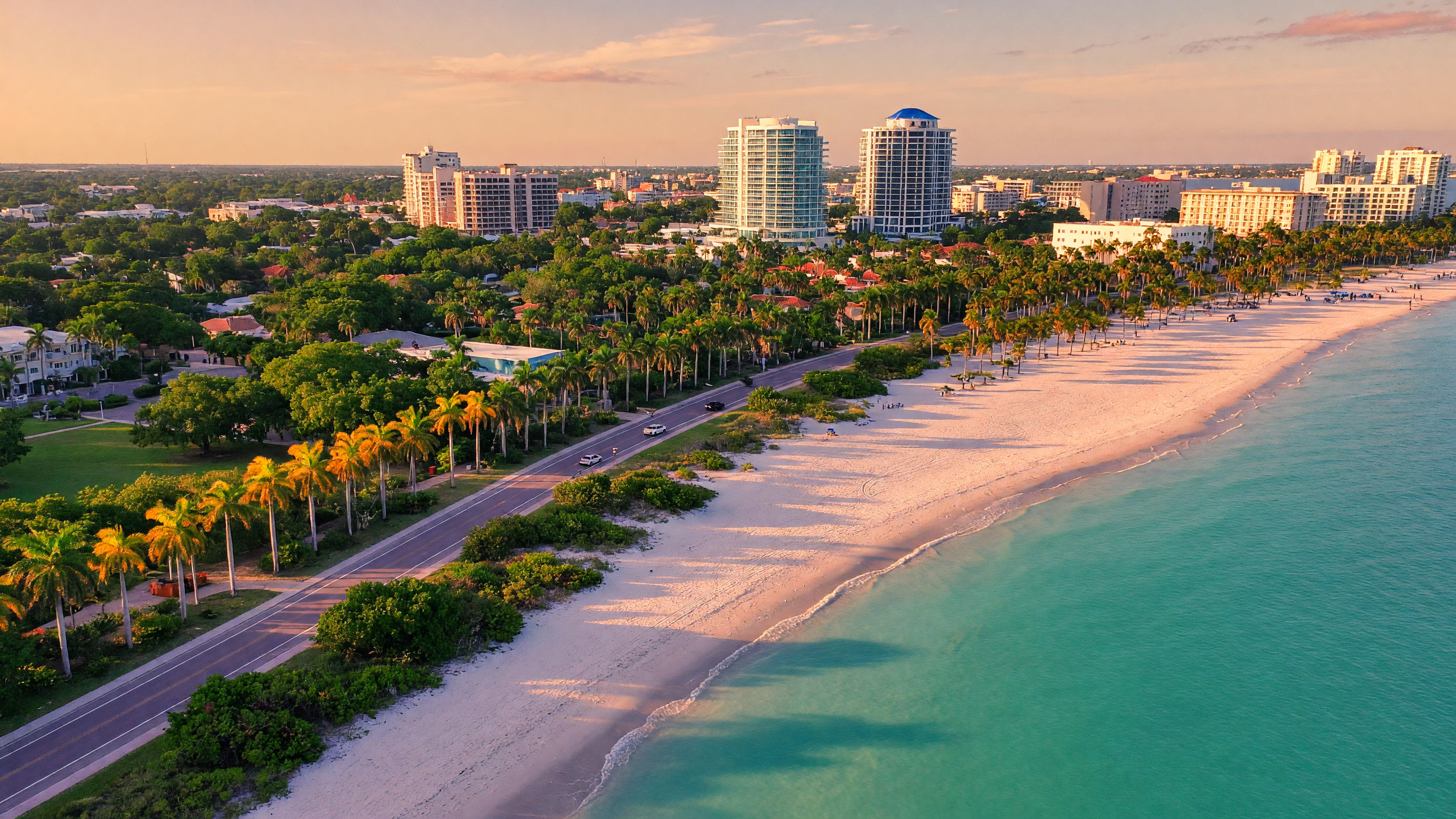
Sarasota Gulf Coast aerial view at golden hour
Still Have Questions?

Let's have a
conversation.

Whether your question is on this page or not, I'm always happy to chat. No pressure, no scripts — just a real conversation with someone who genuinely wants to help you make the right decision.

Send a Note

Ask me anything — I'll get back to you personally.

New listings + market updates in your inbox.